
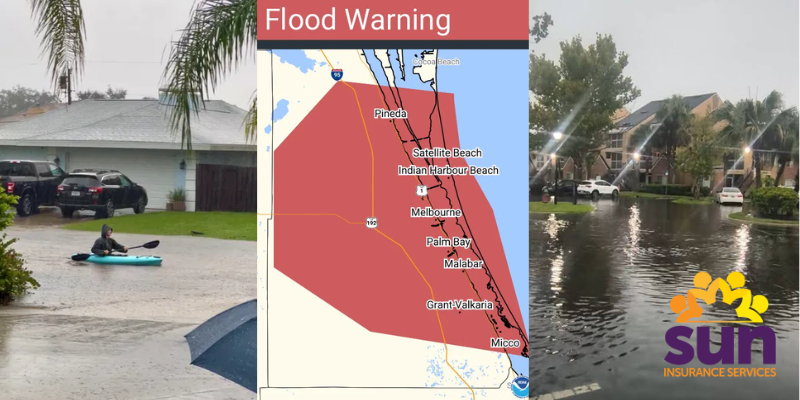
Quick answer: The November 2, 2026 flooding in Melbourne, Palm Bay and surrounding Brevard County communities is a reminder that standard homeowners insurance generally does not pay for flooding caused by rising surface water. A separate flood policy may cover eligible home and belongings damage. For vehicles, flood damage is commonly handled under optional comprehensive auto coverage, subject to the policy.
On November 2, the National Weather Service in Melbourne reported that 15 to 20 inches of rain had fallen in parts of southeastern Brevard County, issuing a flash flood emergency for West Melbourne, Palm Bay and Grant-Valkaria. Flooded streets and stranded motorists showed how quickly intense rainfall can create dangerous conditions even without a named hurricane.
If your property was affected, prioritize safety and follow local emergency instructions. Then review your actual insurance policies before assuming damage is covered. Call or Text (407)781-1600 to discuss your coverage with Sun Insurance Services.
What happened during the November 2 Brevard County flooding?
Heavy rainfall led to dangerous flash flooding around Melbourne, Palm Bay and nearby communities on Monday, November 2, 2026. In its 11:35 a.m. bulletin, the National Weather Service reported 15 to 20 inches of rain in the warned area. These were location-specific reports, not a uniform rainfall total for every part of Brevard County.
The NOAA Weather Prediction Center also documented unusually high rainfall totals on the Space Coast. Residents should continue to use NWS Melbourne and local emergency management sources for current conditions rather than relying on a story published during the event.
Does Florida homeowners insurance cover flood damage?
Generally, no. Standard Florida homeowners policies typically exclude flood damage caused by rising water, surface-water runoff or overflowing bodies of water. That exclusion can apply whether flooding results from a hurricane, a tropical storm or an intense rain event with no named storm.
The Florida Department of Financial Services explains that flood coverage usually must be purchased separately. A homeowners policy may cover certain other types of sudden water damage, such as a covered plumbing incident, but the source of the water and the policy wording matter.
What does Florida flood insurance typically cover?
Flood insurance can help pay for covered damage from qualifying flooding. Depending on the policy, it may insure the structure, some mechanical systems and personal belongings. Building coverage and contents coverage are separate components under the National Flood Insurance Program (NFIP), so do not assume both were purchased.
Private flood insurance policies can have different limits, exclusions and optional benefits. For example, temporary living expenses may not be covered under an NFIP policy, while some private policies may offer them. See the Florida flood insurance overview and NFIP flood basics for more detail.
Can your car insurance cover a flooded vehicle?
Often, yes, if you purchased comprehensive coverage. Comprehensive auto insurance, sometimes called other-than-collision coverage, commonly covers flood damage to a vehicle. Liability-only insurance generally does not pay to repair your own flooded car. Your deductible, exclusions and claim determination still apply.
The Florida Department of Financial Services auto insurance guide identifies flood as a loss typically addressed by comprehensive coverage. Do not start or drive a flood-damaged vehicle until it has been assessed safely.
Does living outside a high-risk flood zone mean you are safe?
No. FEMA flood maps describe levels of risk, but flooding can happen outside mapped high-risk areas. Intense local rain, drainage limitations and runoff can affect neighborhoods that do not usually experience standing water.
Flood insurance may be available even if your mortgage lender does not require it. Check the FEMA Flood Map Service Center for your property and discuss available policies and limits before the next storm.
Can you buy flood insurance after a flood has started?
You can ask about purchasing a policy, but a newly purchased flood policy generally will not cover damage that occurred before it became effective. NFIP flood policies normally have a 30-day waiting period, with certain exceptions. Private flood waiting periods vary. Purchasing coverage when a storm is already affecting an area should not be treated as protection for the current event.
For a review of future flood insurance options, Call or Text (407)781-1600.
What should you do if your home or vehicle flooded?
- Protect people first. Stay out of floodwater and follow local safety instructions. Never drive across a flooded road.
- Document safely. Photograph visible damage and record dates, water levels and damaged items when conditions permit.
- Notify your insurer promptly. Contact the appropriate homeowners, flood or auto insurance carrier and follow claim-reporting instructions.
- Prevent additional damage when safe. Keep receipts for reasonable emergency measures, and avoid throwing away damaged items until your adjuster advises you about documentation.
- Review each policy separately. Homeowners, flood and auto policies may respond differently to damage from the same weather event.
Frequently asked questions about the Melbourne flooding and insurance
Was the Melbourne flooding caused by a hurricane?
The November 2, 2026 flooding discussed here was associated with prolonged heavy rainfall, not a named hurricane making landfall. A hurricane does not need to occur for flooding to create a serious insurance loss.
Will homeowners insurance pay if rainwater enters through the front door?
When rainwater accumulates outside and flows into a home, that typically meets the type of surface-water flooding excluded by standard homeowners insurance. A qualifying flood policy may respond, subject to its terms.
Does flood insurance cover belongings inside my home?
It may, if contents coverage is included in your flood insurance policy. NFIP building and contents coverage are distinct, and personal-property limitations apply.
What if water came from a broken pipe instead of the street?
Sudden water damage caused by an accidental plumbing event may be handled differently from rising floodwater. Coverage depends on the cause and the specific homeowners policy.
Does a Florida auto policy automatically include flood coverage?
No. Florida drivers should verify whether comprehensive, or other-than-collision, coverage is included. Liability coverage alone generally does not cover damage to the insured vehicle from floodwater.
Is flood insurance mandatory for every Florida home?
No. Some lenders and policy programs may require it in particular circumstances, but there is no universal requirement that every Florida homeowner purchase flood insurance.
Will a flood policy purchased today cover yesterday’s damage?
No. Insurance does not retroactively cover damage that occurred before the applicable policy effective date. New flood policies also typically have a waiting period.
Do renters need flood insurance?
Renters insurance generally excludes damage from rising floodwater. Eligible renters may purchase flood contents coverage for belongings, depending on available insurance options.
Review your flood and auto coverage before the next heavy rain
The Melbourne and Palm Bay flooding shows why Florida residents should review flood protection even when a hurricane is not approaching. The important questions are whether you have a flood policy, whether that policy includes contents coverage and whether your auto policy includes comprehensive coverage.
Sun Insurance Services is an independent Florida insurance agency serving Central Florida since 2003. We can help you review policy terms and compare available coverage options. Call or Text (407)781-1600 or visit Sun Insurance Services.
Updated November 3, 2026. This article provides general insurance information, not a determination of coverage for a particular loss. Actual coverage depends on policy terms, conditions, exclusions and deductibles.