
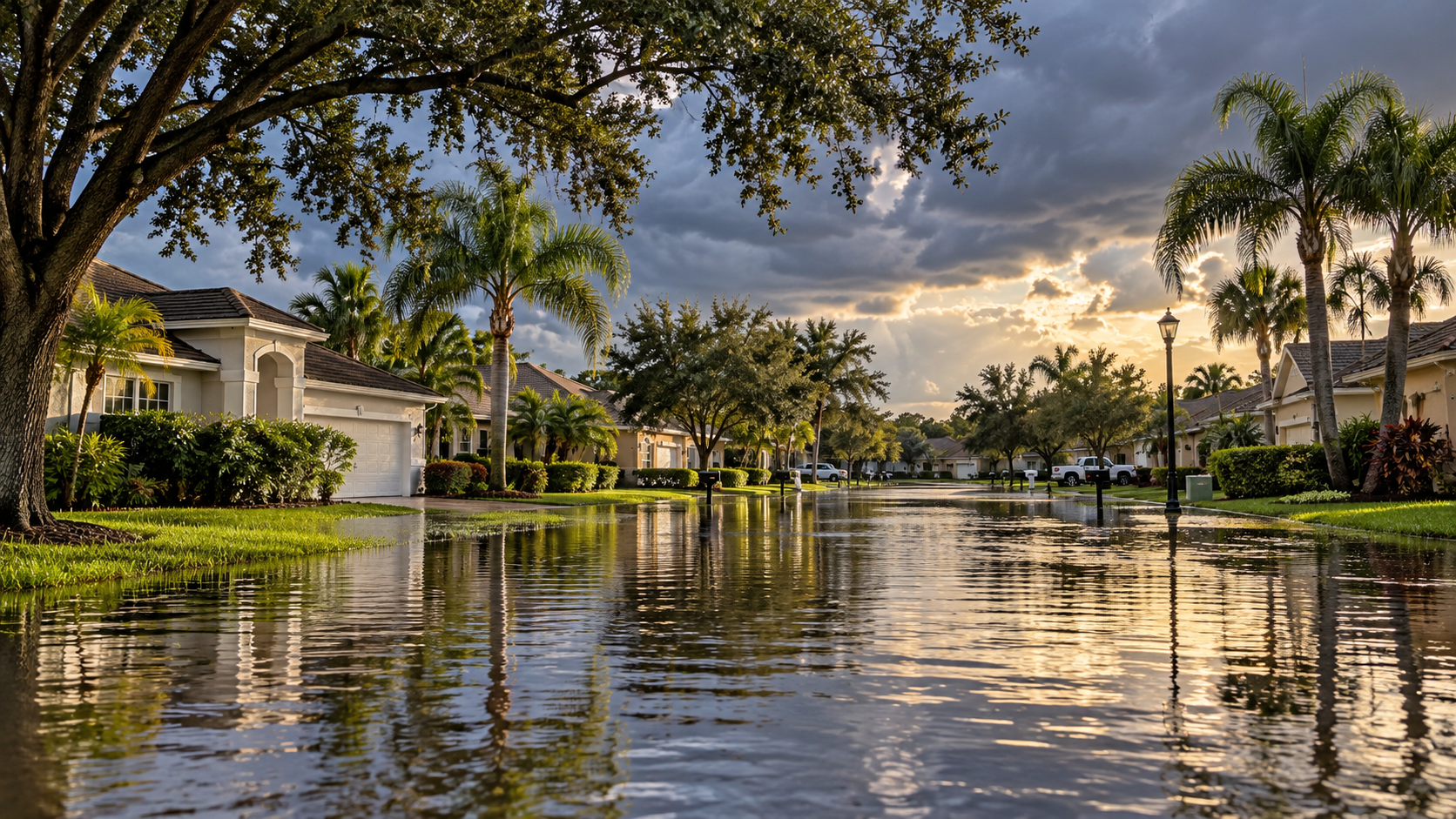
Orlando Flooding Is a Reminder: You Don’t Have to Live on the Coast to Have Flood Risk
Does Orlando Really Have a Flood Risk?
Quick Answer- Yes. Orlando and surrounding Central Florida communities can experience flooding even though they are far from Florida’s coastline. The National Flood Insurance Program explains that flooding can occur even when a property is not near an ocean, lake or river.
We have seen that risk locally this month. On September 7, 2026, the National Weather Service issued a Flash Flood Warning for west-central Orange County, including Orlando, Ocoee, Windermere, Pine Hills, Lockhart, Orlovista, Gotha and Lake Butler.
The insurance issue is important: most homeowners insurance does not cover flood damage. Flood coverage generally requires a separate flood insurance policy.
Request an Orlando flood insurance quote or Call or Text (407)781-1600.
Recent Flooding Shows That Orlando’s Flood Risk Is Not Just Theoretical
Recent National Weather Service alerts provide real Central Florida examples.
On September 7, 2026, Doppler radar showed thunderstorms producing heavy rain over west-central Orange County. The National Weather Service reported that 2 to 3 inches of rain had fallen, with up to another inch possible, and said flash flooding was ongoing or expected to begin shortly.
That warning specifically identified Orlando, Ocoee, Windermere, Pine Hills, Lockhart, Orlovista, Clarcona, Gotha and Lake Butler. The NWS warned that impacts could include flash flooding of urban areas, highways, streets, underpasses, small creeks and streams, and other low-lying or poorly drained locations.
The next day, September 8, another Orange County Flood Advisory reported 2 to 3 inches of rain with another 1 to 2 inches expected in areas including Apopka, Ocoee, Winter Garden, Windermere, Oakland, Horizon West and Gotha.
Then, on September 21, another NWS Flood Advisory reported up to 2 inches of rain in southwestern Orange County with another 1 to 2 inches expected. Locations included Ocoee, Winter Garden, Windermere, Bay Lake, Bay Hill, Doctor Phillips, Universal Studios, SeaWorld, Hunters Creek and Lake Buena Vista.
Central Florida does not need a direct hurricane strike to experience flooding. Heavy rainfall alone can create flood conditions.
Watch: Flooding Right Here in Orlando
This recent video provides a striking local example of why flooding deserves attention in Central Florida:
It illustrates an important distinction: flood risk is not limited to coastal communities or properties next to large bodies of water.
Does Homeowners Insurance Cover Flooding in Florida?
Most homeowners insurance does not cover flood damage.
The source of the water matters. According to the NFIP, water damage from an internal source such as a broken pipe or water heater may fall under homeowners or renters insurance, while rain that accumulates and flows into a home is considered flooding.
| Example | Coverage That May Apply |
|---|---|
| A broken pipe or water heater causes water damage inside the home | Homeowners insurance may apply, depending on policy terms |
| Wind damages a roof and rain enters through the opening | Homeowners or wind coverage may apply, depending on policy terms |
| Rain accumulates outside and flows into the home | Flood insurance may apply |
| A lake, river or other outside water source overflows | Flood insurance may apply |
| Storm surge enters a property | Flood insurance may apply |
Coverage always depends on the cause of loss and the terms, conditions, limits and exclusions of the applicable policy.
Do I Need Flood Insurance If I’m Not in a High-Risk Flood Zone?
A property does not have to be in FEMA’s highest-risk flood zones to experience flooding.
FEMA flood maps are useful for understanding mapped flood hazards, but they should not be interpreted to mean that properties outside a Special Flood Hazard Area have zero risk.
The more useful questions are often:
- What is the flood exposure at my specific property?
- What would my existing insurance cover if outside water entered my home?
- What would it cost to add flood coverage?
What Does Flood Zone X Mean in Orlando?
Zone X does not mean “no flood risk.”
FEMA identifies Zone X as an area of lower mapped flood hazard than Special Flood Hazard Areas. FEMA’s mapping guidance also distinguishes between shaded Zone X areas associated with moderate flood hazard and unshaded Zone X areas outside the 0.2% annual-chance floodplain.
FEMA also emphasizes that wherever rain falls, flooding can follow.
A lender’s decision about whether flood insurance is required and a homeowner’s decision about whether the financial risk is worth insuring are therefore separate questions.
What Is a Special Flood Hazard Area?
This is often called the “100-year flood,” but that term does not mean flooding happens only once every 100 years. FEMA defines the 100-year flood as a flood having a 1% chance of being equaled or exceeded in any given year.
Properties in certain high-risk flood zones may be subject to mandatory flood insurance purchase requirements when federally backed financing is involved.
What Can Cause Flooding in Orlando?
Flooding does not require a hurricane.
FEMA identifies poor drainage systems, summer storms and other changing conditions as potential causes of flooding. Its flood guidance also identifies storm surge and overflowing rivers and streams following heavy rainfall as recognized types and causes of flooding.
Potential Central Florida flood scenarios include:
- Slow-moving thunderstorms producing intense rainfall
- Tropical storms and hurricanes
- Overflowing lakes, ponds and other bodies of water
- Overwhelmed drainage systems
- Water accumulating in low-lying areas
- Repeated rainfall over already saturated areas
The September 2026 Orange County alerts demonstrate the thunderstorm risk directly. On September 7, the NWS reported 2 to 3 inches of rainfall and warned of flash flooding from thunderstorms.
What Does Flood Insurance Cover?
Building and contents coverage are separate under the NFIP and generally have separate deductibles.
NFIP vs. Private Flood Insurance: What’s the Difference?
Florida property owners may have access to NFIP coverage, private flood insurance or both, depending on the property and insurer eligibility.
The National Flood Insurance Program is the federal flood insurance program administered by FEMA. Private flood insurance is issued by private insurance companies and can have different limits, deductibles, underwriting rules and coverage features.
One important NFIP distinction is additional living expenses. The NFIP states that temporary housing and additional living expenses while a home is being repaired are not covered by its standard flood policy. Some private flood products may offer different coverage, depending on the carrier and policy.
Request a flood insurance quote or Call or Text (407)781-1600.
Can I Wait Until a Hurricane Is Coming to Buy Flood Insurance?
Waiting until a storm threatens Florida can be too late.
NFIP coverage generally takes effect 30 days after purchase, although FEMA provides specific exceptions, including certain mortgage transactions, policy renewals, map changes and qualifying post-wildfire situations.
Private flood insurance effective-date and waiting-period rules vary by carrier.
That makes flood coverage something to evaluate before the next major rain event or tropical system appears in the forecast.
What Should Orlando Homeowners Check Right Now?
- Check whether you already have flood insurance. Most homeowners insurance does not cover flood damage.
- Look up your FEMA flood zone. Use the official FEMA Flood Map Service Center.
- Consider the property itself. Elevation, drainage and nearby water can affect flood exposure.
- Review building and contents coverage separately. NFIP building and contents coverage are separate and generally carry separate deductibles.
- Compare available options. NFIP and private flood policies may differ in coverage, limits and eligibility.
- Do it before the next storm. NFIP policies generally have a 30-day waiting period before coverage begins, subject to exceptions.
Can Renters Get Flood Insurance in Orlando?
A landlord’s insurance should not be assumed to cover a tenant’s belongings after a flood.
Does Flood Insurance Cover Cars?
NFIP flood insurance does not cover cars and most self-propelled vehicles.
Vehicle flood damage may instead fall under comprehensive auto insurance when comprehensive coverage is included on the applicable auto policy, subject to its terms and deductible.
Can Orlando Businesses Buy Flood Insurance?
Yes. The NFIP offers commercial flood insurance for eligible business buildings and contents.
Business owners should not assume a commercial property policy automatically covers flooding. Coverage should be verified against the actual policy.
How Can I Get an Orlando Flood Insurance Quote?
Start with the property address. Flood insurance pricing and eligibility depend on the individual property and policy.
Sun Insurance Services is an independent Florida insurance agency based in the Orlando area. We can review available flood insurance options and help explain differences in limits, deductibles and policy features.
Request an Orlando flood insurance quote or Call or Text (407)781-1600.
Frequently Asked Questions About Flood Insurance in Orlando
Does homeowners insurance cover flood damage in Orlando?
Most homeowners insurance does not cover flood damage. A separate flood policy is generally needed for qualifying flood losses.
Can Orlando flood even though it is inland?
Yes. FEMA states that flooding can happen even when a property is not near an ocean, lake or river. The September 2026 Orange County warnings provide a recent local example.
Do I need flood insurance if my Orlando home is in Zone X?
Zone X does not mean zero risk. FEMA states that flooding can happen anywhere, including outside areas mapped as high risk.
What is the difference between flood insurance and homeowners insurance?
The source of the water is important when determining which type of insurance may respond. Most homeowners policies do not cover flooding, while flood insurance is specifically designed for qualifying flood losses.
Does flood insurance cover my belongings?
It can. NFIP contents coverage can protect eligible belongings such as clothing, furniture and electronics. Building and contents coverage are generally purchased separately.
Can renters buy flood insurance in Orlando?
Yes. NFIP renters policies can provide contents coverage for eligible belongings.
Does flood insurance cover cars?
No under an NFIP home flood policy. FEMA lists cars and most self-propelled vehicles among property not covered by NFIP flood insurance.
Can businesses in Orlando buy flood insurance?
Yes. NFIP commercial flood coverage is available for eligible business buildings and contents.
How quickly does NFIP flood insurance become effective?
NFIP coverage generally begins 30 days after purchase, although FEMA provides several exceptions. Private flood policy waiting periods vary.
Where can I check my Orlando property’s flood zone?
Use FEMA’s official Flood Map Service Center to review the current mapped flood hazard for an address.
The Bottom Line for Orlando Property Owners
Orlando’s September flooding is a reminder that living inland does not eliminate flood risk. The National Weather Service documented 2 to 3 inches of rain and flash flooding concerns in west-central Orange County on September 7, followed by additional Orange County flood advisories during the month.
At the same time, most homeowners insurance does not cover flood damage.
You do not have to live on the coast or beside a body of water to have flood risk.
Sun Insurance Services can help Florida property owners review available flood insurance options.
Request a Florida flood insurance quote or Call or Text (407)781-1600.


Sources
Last updated September 30, 2026. This article provides general insurance information. Coverage, eligibility, limits, deductibles, waiting periods and exclusions depend on the applicable policy and carrier. Policy language controls coverage.